AN EXCEPTIONAL 19TH CENTURY JAPANESE VESSEL ON A MID 19TH CENTURY ENGLISH CARVED OAK STAND


[Click image to view in new window, left or right arrow to see previous or next image.]
AN EXCEPTIONAL 19TH CENTURY JAPANESE VESSEL ON A MID 19TH CENTURY ENGLISH CARVED OAK STAND
SOLD
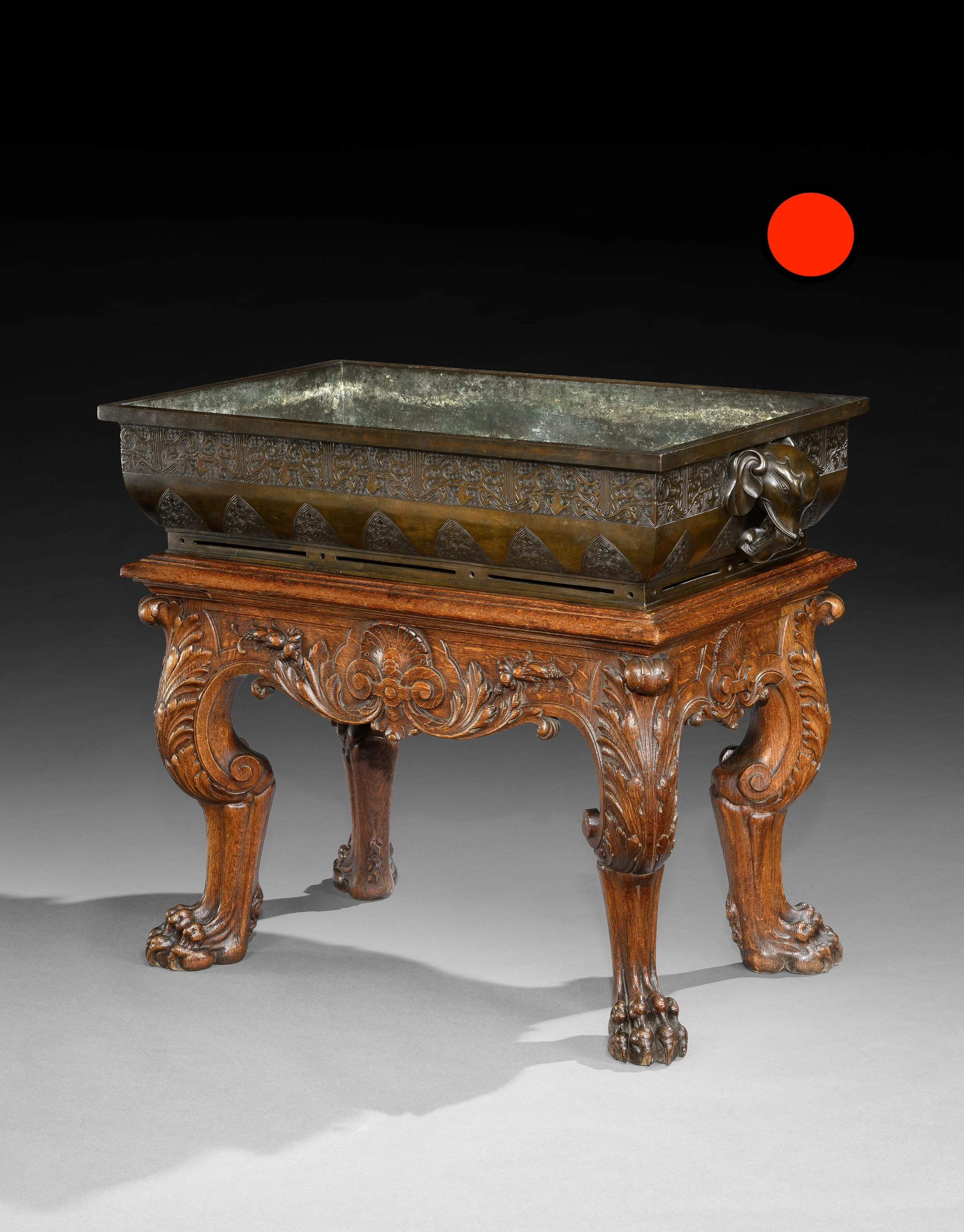
A Japanese Bronze Rectangular Vessel (Possibly Jardinières, Censers, or Planters) With a Mid-19th Century English Carved Oak Stand.
Meiji Period, mid 19th century (Vessel)
English, mid 19th century (stand)
Dimensions:
Height: 75cm / 29.5 Inches
Depth: 51.2cm / 20.25 Inches
Width: 94 cm / 37 Inches
Note: We are fortunate to have an almost identical vessel on stand available on our website if a matched pair was required.
These would make a wonderful planter or log containers beside an open fire.
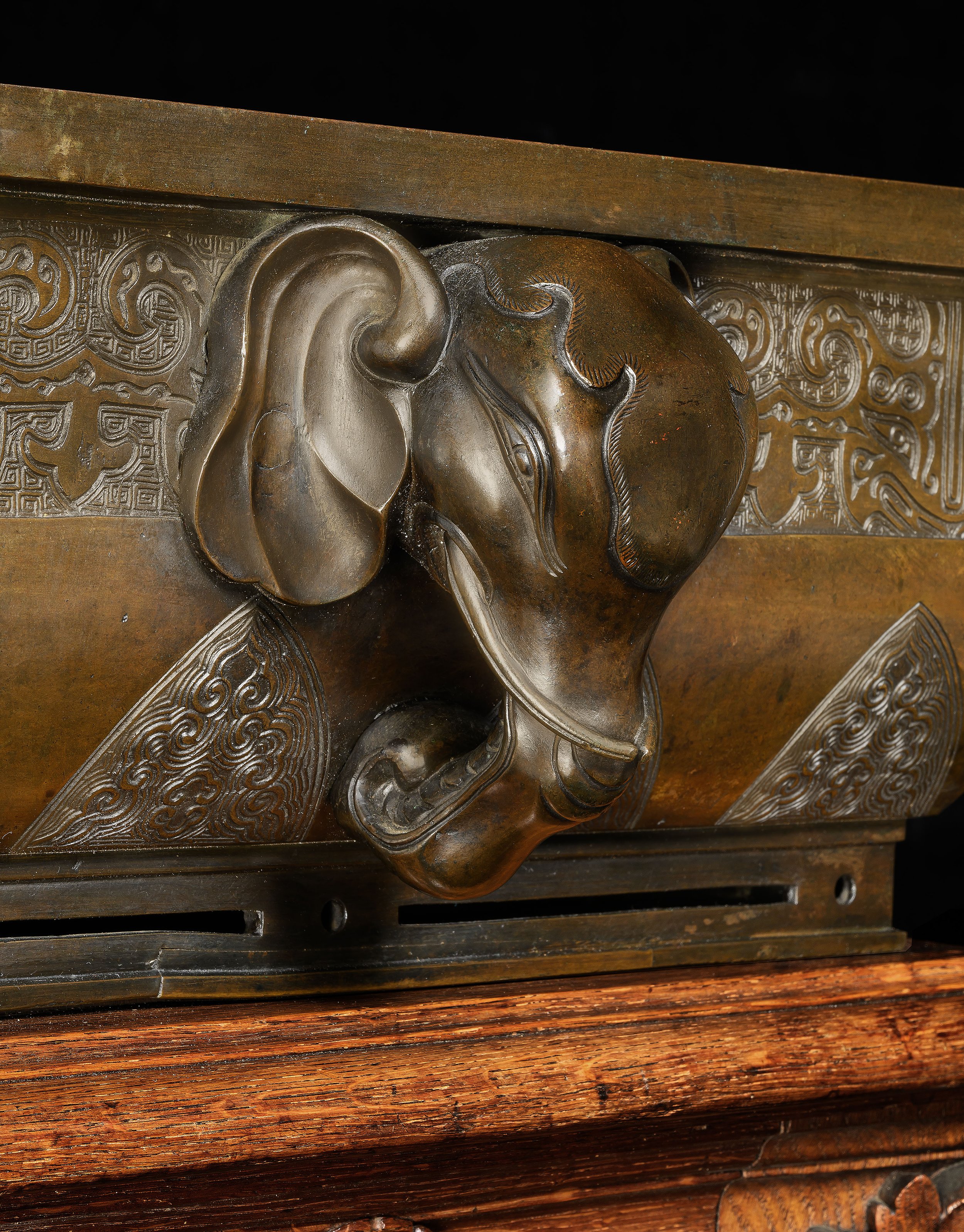
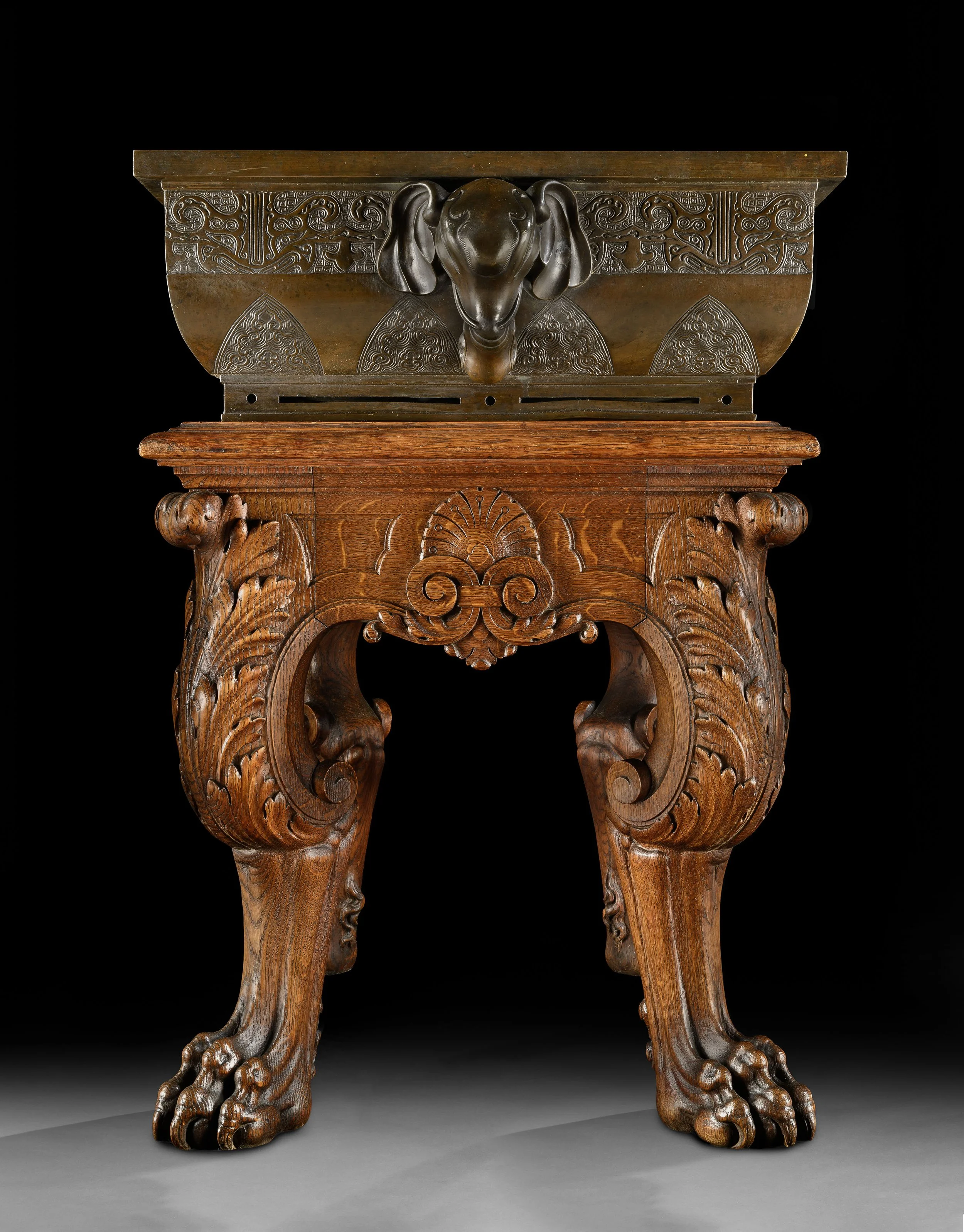
The bronze vessel of rectangular form. The short sides are fitted with sculpted elephant head handles. The surface shows fine casting and chasing, characteristic of high-quality Meiji-period metalwork.
One vessel is stamped on the underside with the mark Onishi Joran – Okamashi.
Ōnishi Jōrin (大西浄林) refers to a lineage of famed metalworkers (kama-shi / 釜師), active from the 16th century onward in Kyoto. The Ōnishi family specialized in the creation of tea ceremony utensils—kettles, braziers, incense burners, and bronze vessels—often showcasing refined casting techniques and subtle decorative schemes. The term "Okamashi" indicates a maker of kettles, jars, or vessels.
The vessel dates to the Meiji era (1868–1912), a transformative period in which Japan shifted from an isolated feudal society to a modern nation-state. Increased contact with the West led to flourishing export trade, and Japanese bronze vessels of this type—rectangular forms with animal-head handles and repeating geometric decoration—became highly desirable to Western collectors. Technical advances during the Meiji era, including improved sand- and lost-wax casting, enabled the production of pieces with crisp relief and elegant finishes such as seen here.
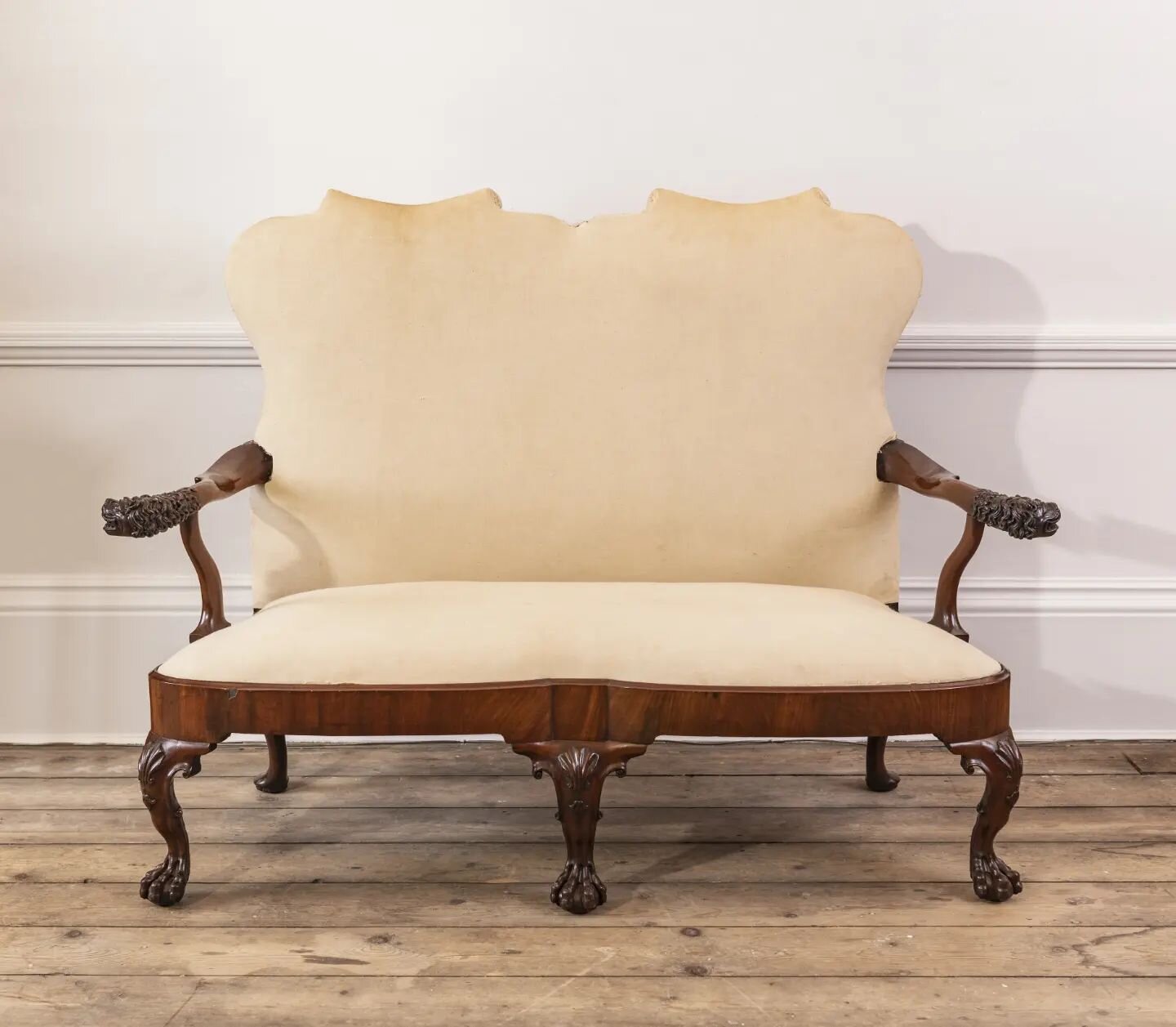
The vessel rests on exceptionally ornate English carved oak stand, dating to the mid-19th century and likely made shortly after the bronzes were brought to Britain. The stand features cabriole legs terminating in claw-and-ball feet, richly carved with Rococo scrolls and acanthus foliage. Their elaborate style contrasts attractively with the restrained geometry of the bronze vessel.
This piece exemplify the cross-cultural aesthetic exchange of the late 19th century—Japanese craftsmanship admired for its refinement, paired with English decorative furniture created to present such treasures within Western interiors.