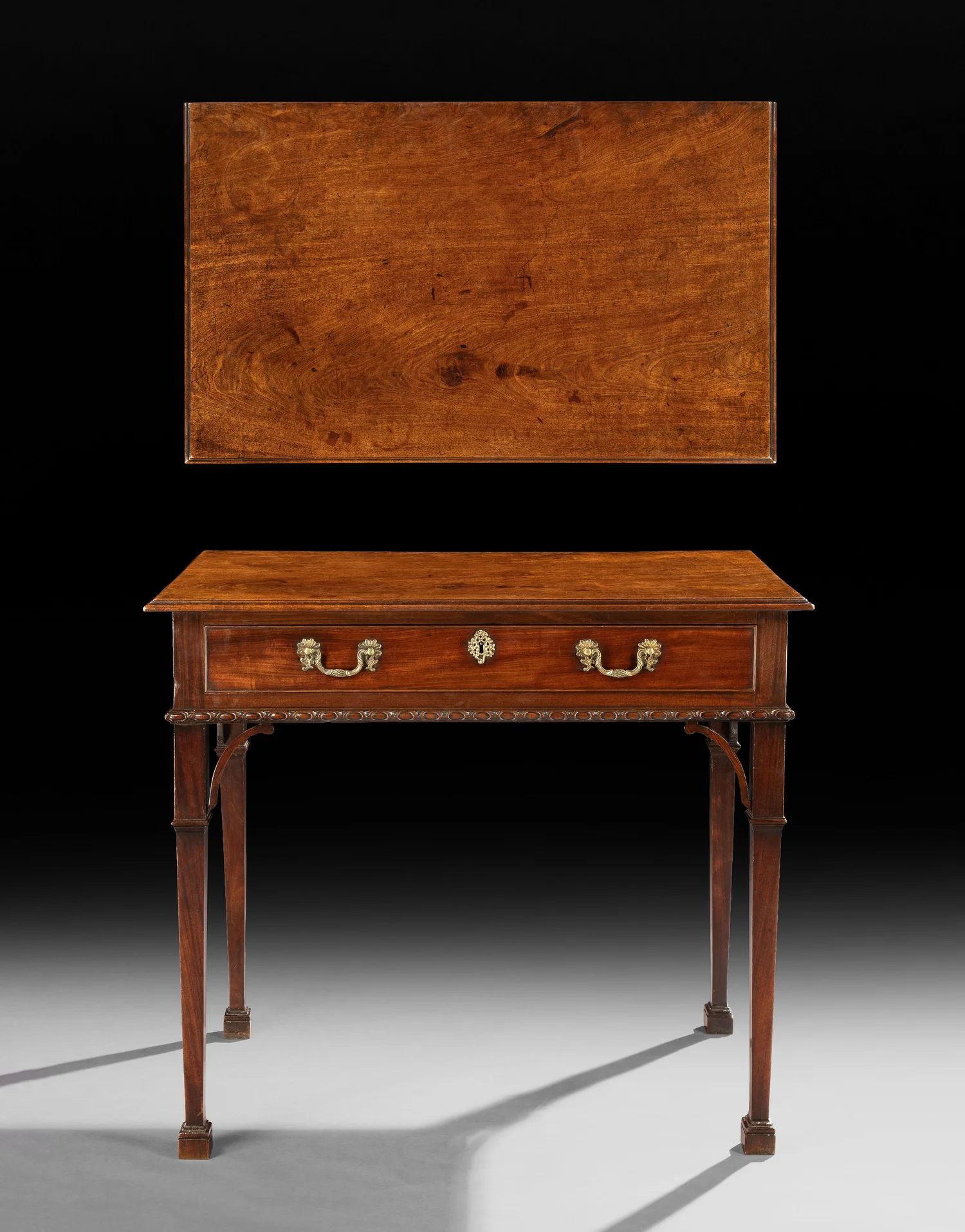
AN EXCEPTIONAL GEORGE III MAHOGANY SIDE TABLE
[Click image to view in new window, left or right arrow to see previous or next image.]
AN EXCEPTIONAL GEORGE III MAHOGANY SIDE TABLE
In the Manner of Thomas Chippendale.
England, circa 1765.
Dimensions:
Height: 86.5 cm
Width: 97 cm
Depth: 60.5 cm
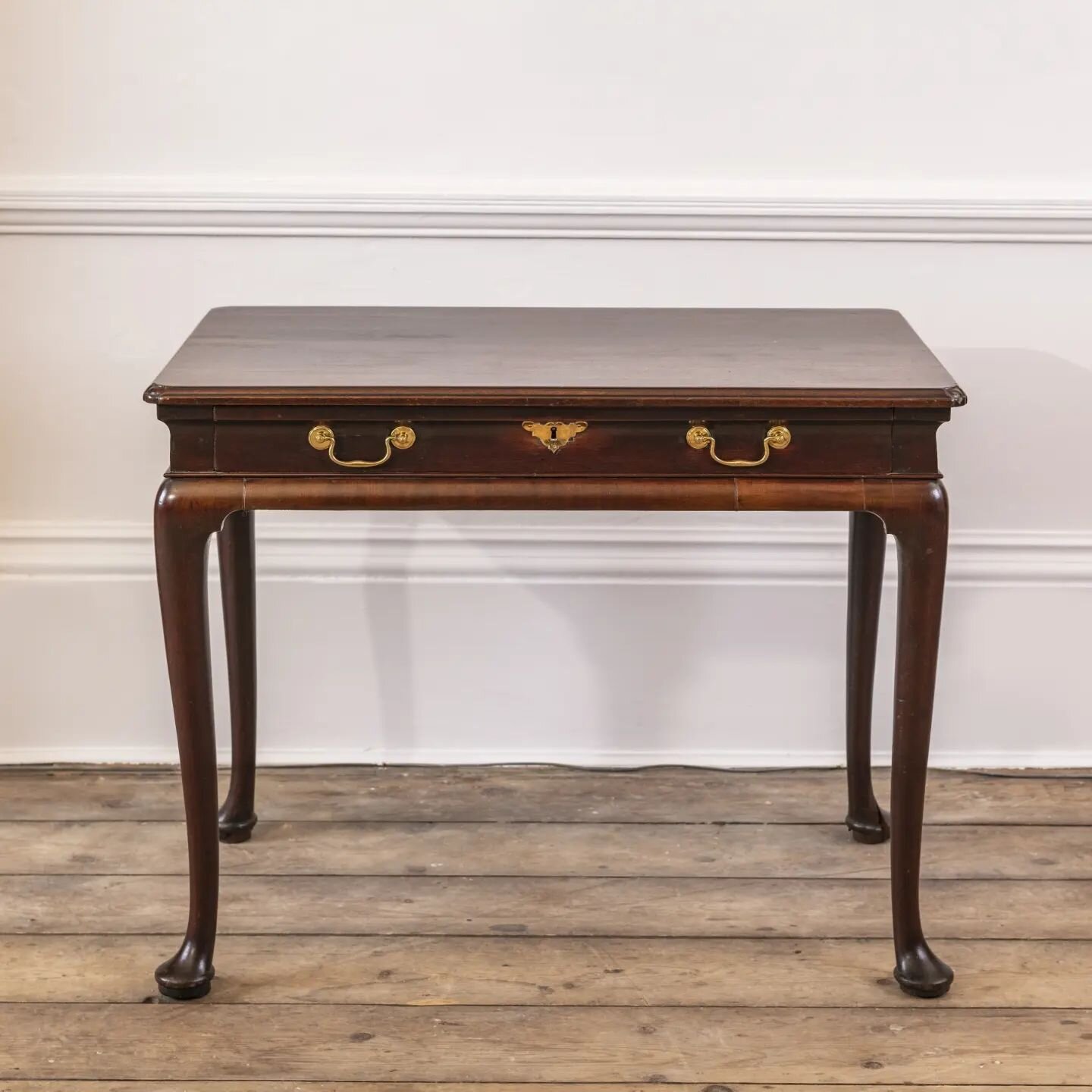
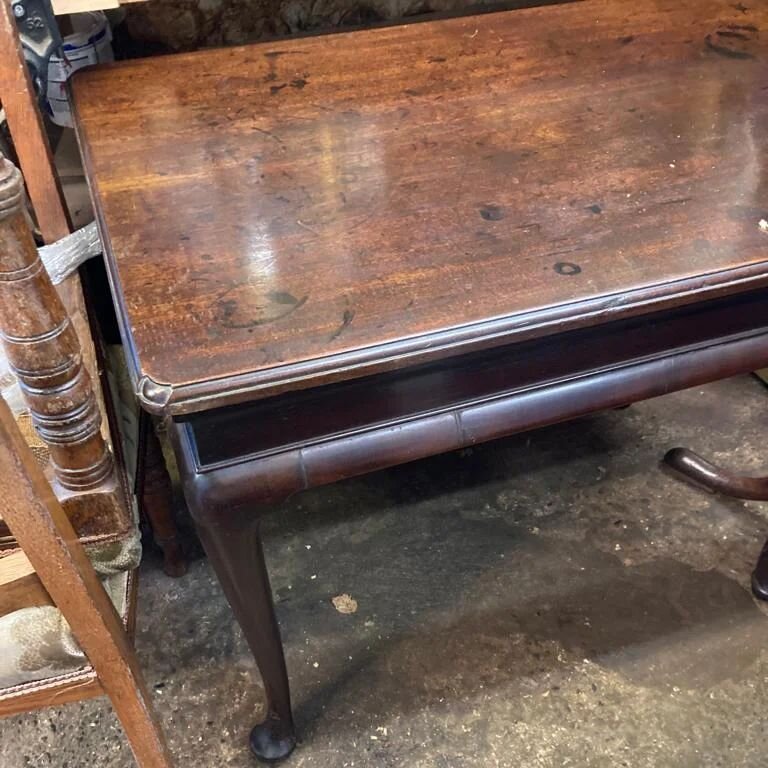
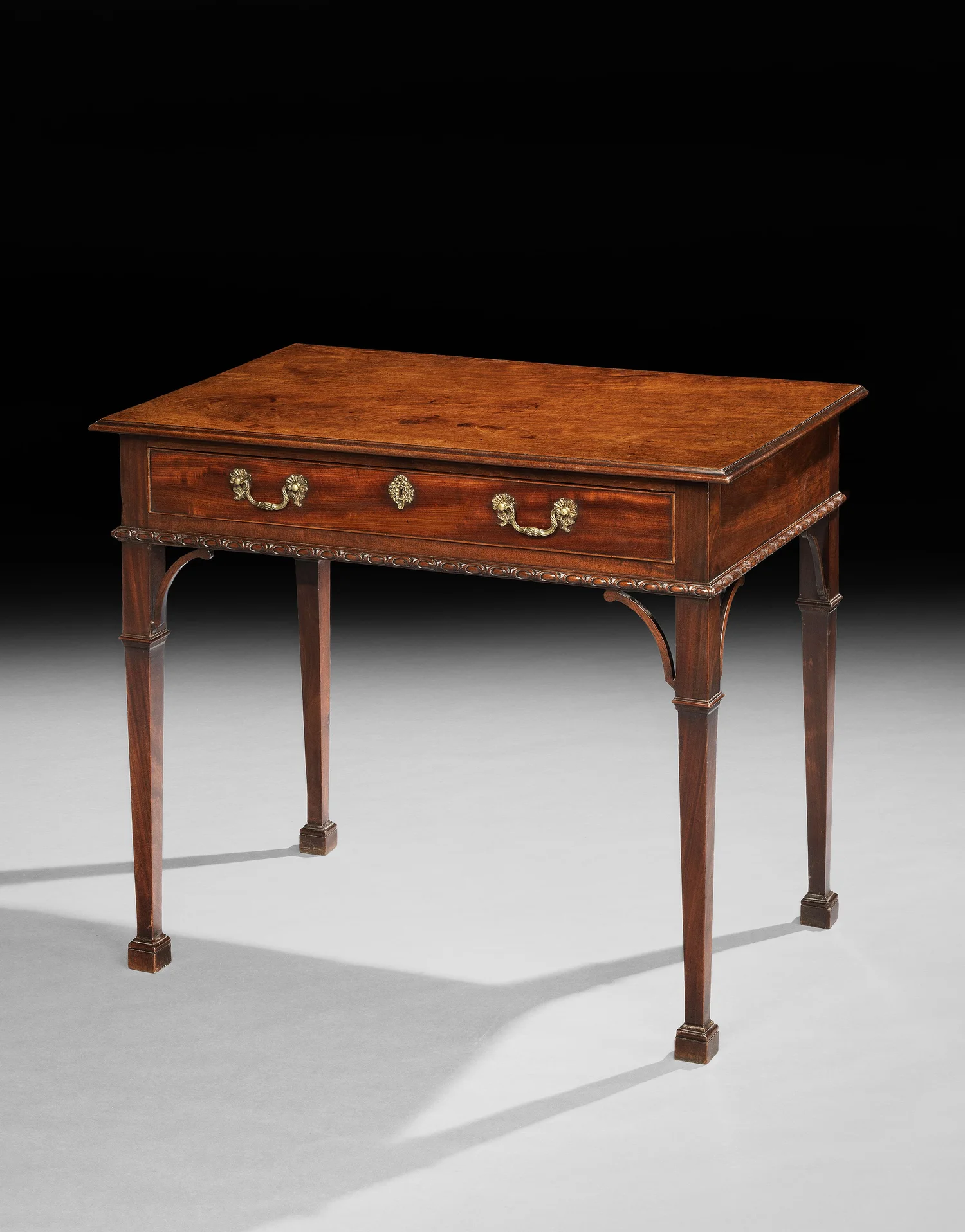
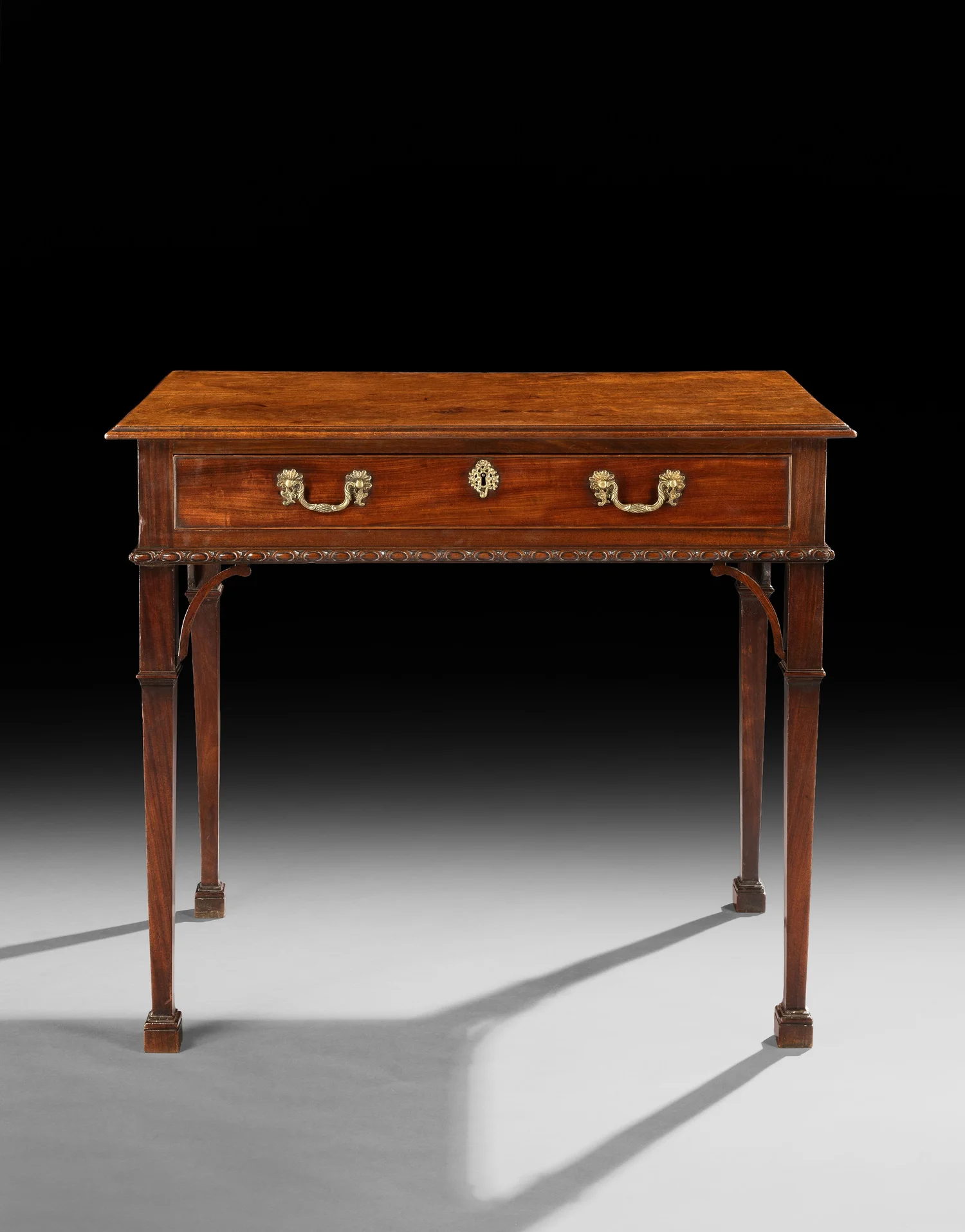
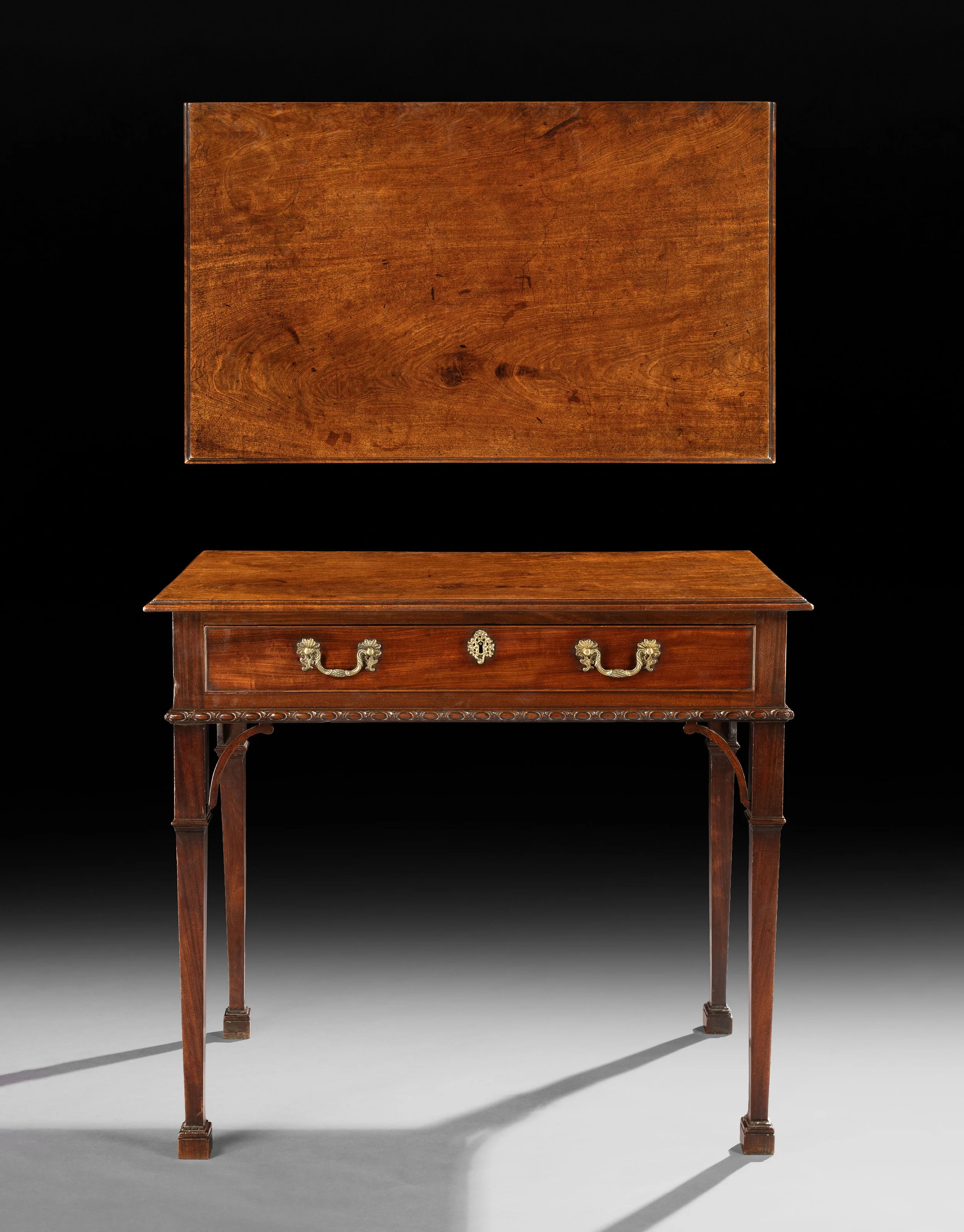
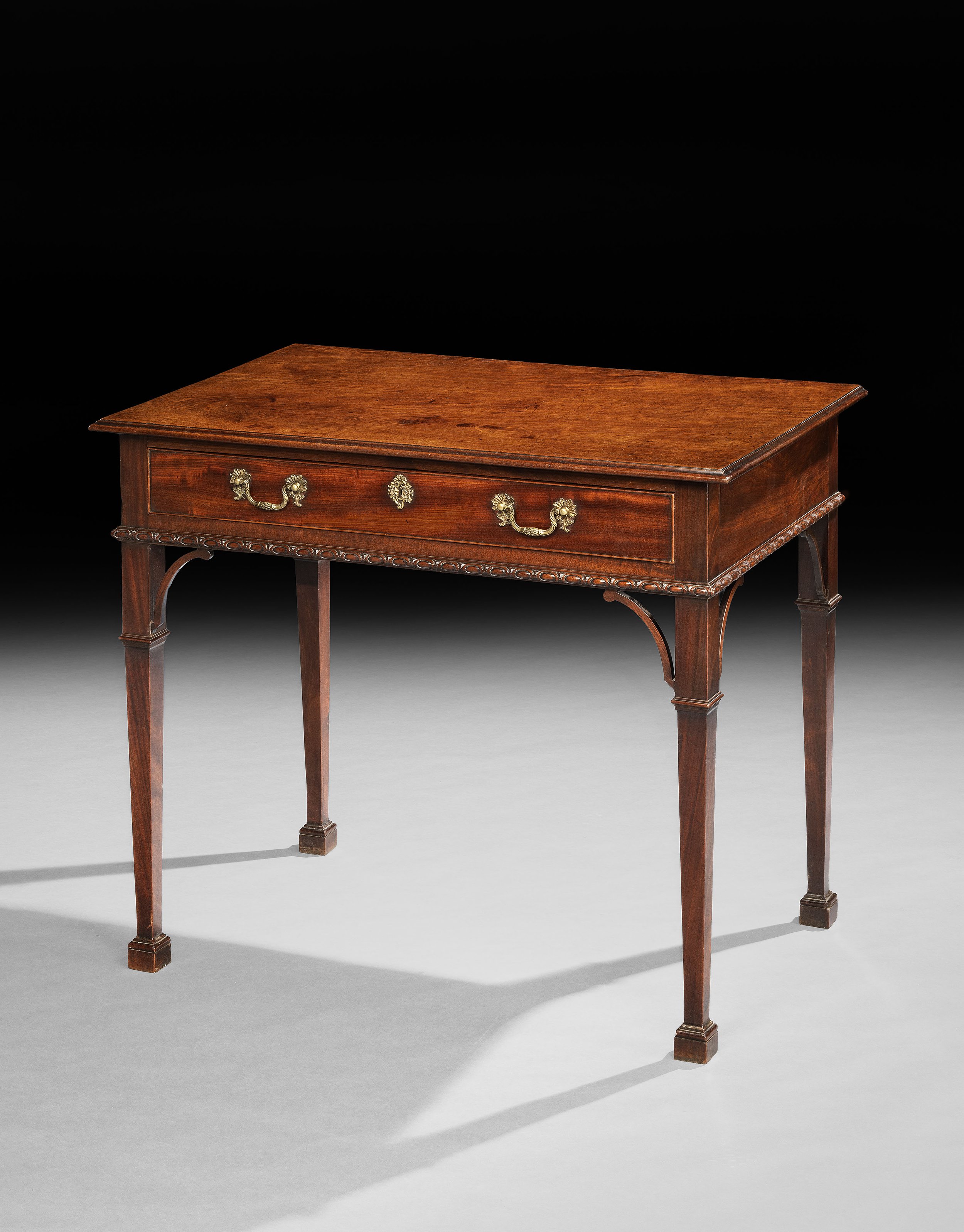
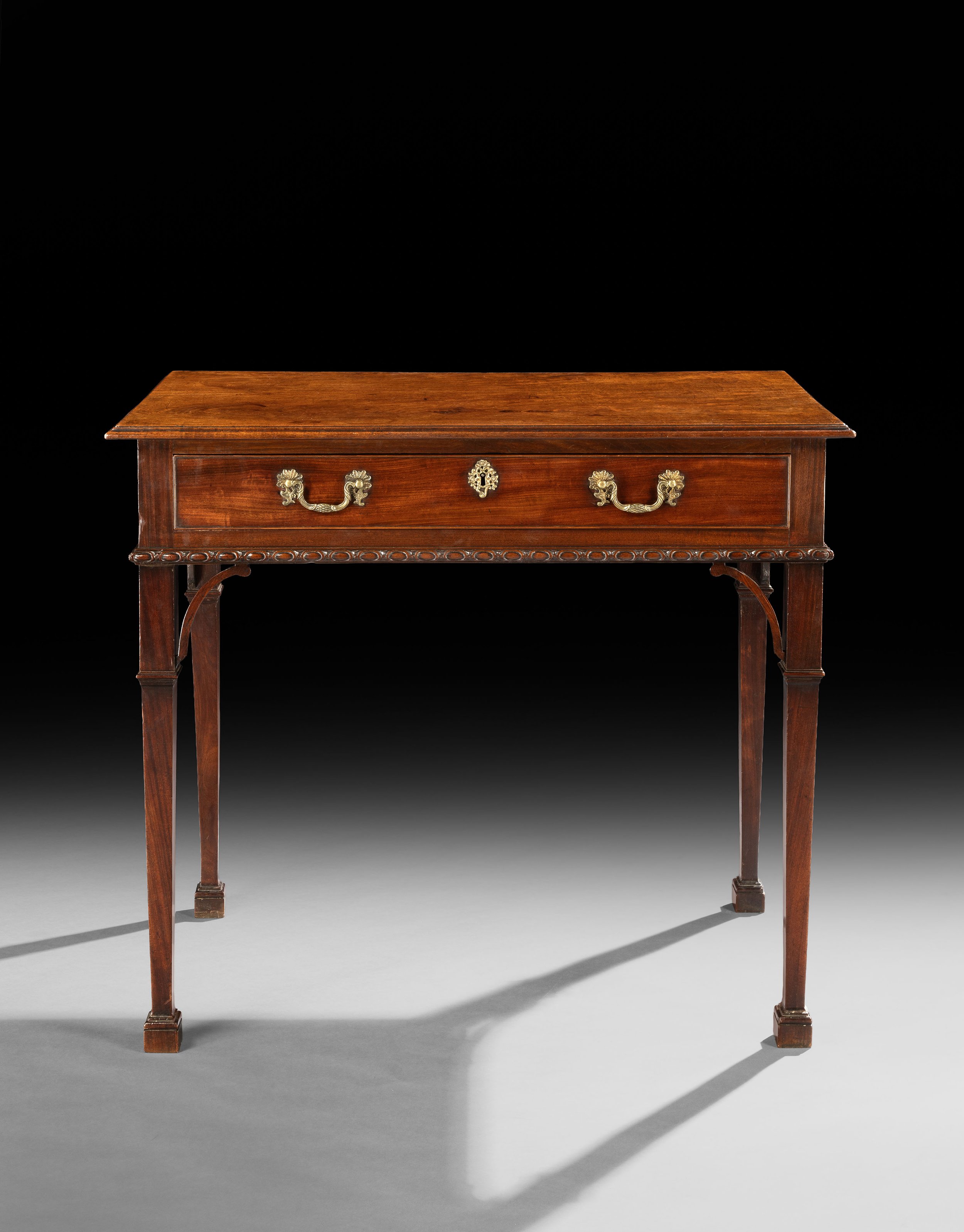
An exceptional George III Chippendale-period mahogany side table, dating from the mid-18th century and displaying the refined proportions and elegant detailing associated with the finest furniture of the period.
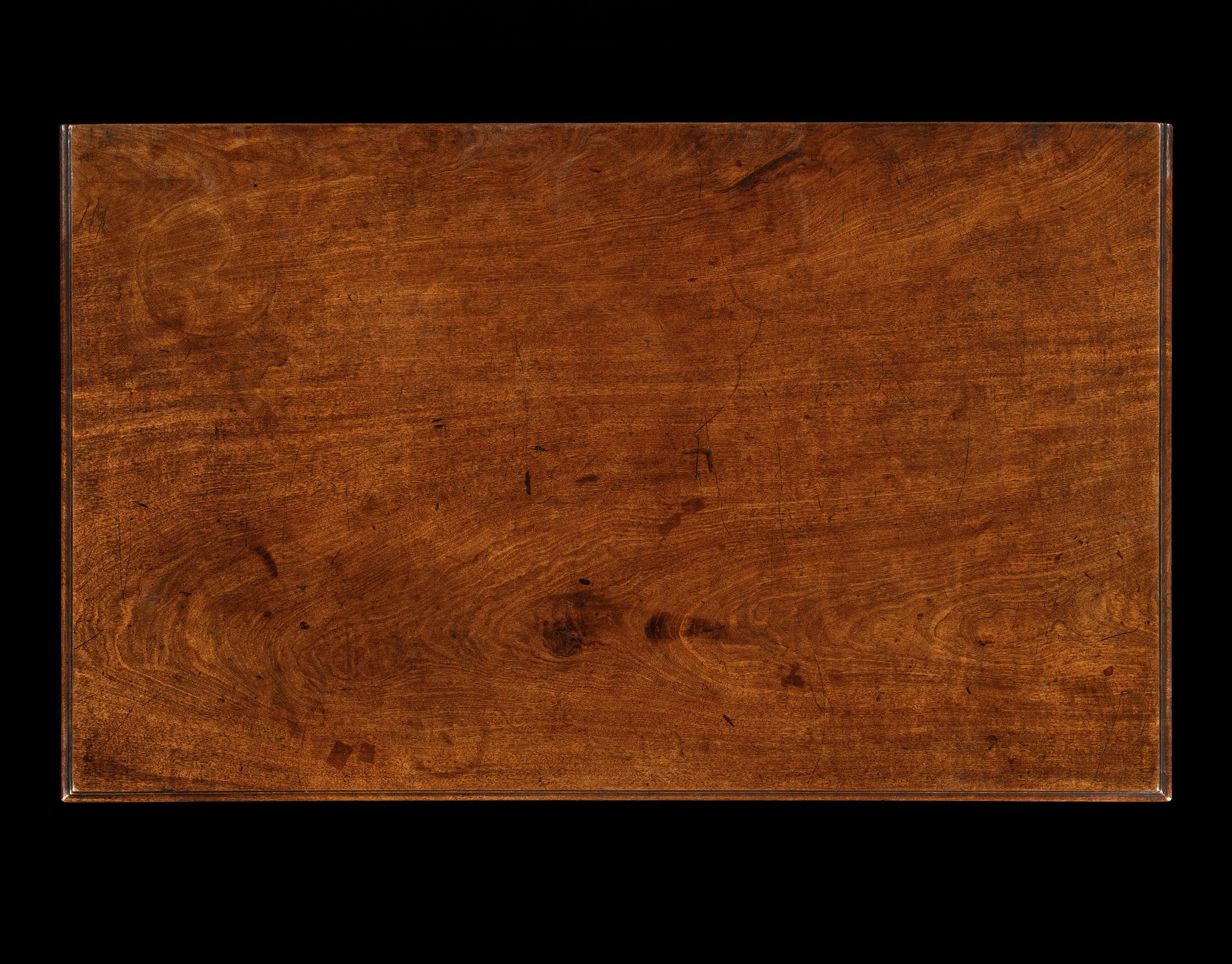
The beautifully figured mahogany top sits above a single frieze drawer, retaining its original brass handles. The table is raised on four elegant square, tapering legs, terminating in block feet.
A particularly handsome example, distinguished by its superb timber, excellent colour and wonderfully rich, well-developed patina throughout.
ATTRIBUTION
Although a firm attribution cannot be established, this exceptional table is certainly of London manufacture, as demonstrated by the quality of its construction, materials, design and execution.
The sophistication of the workmanship indicates a leading London cabinet-making workshop, with Thomas Chippendale and William & John Linnell being the two most probable candidates.
THOMAS CHIPPENDALE (1718–1779)
Born in Otley, Yorkshire, Thomas Chippendale was one of 18th-century England’s most celebrated cabinet-makers. Trained as a cabinet-maker, and possibly also as a draughtsman, he established his workshop in London before 1748. His highly influential designs and exceptional craftsmanship secured commissions from some of the leading aristocratic and mercantile families of the period. His eldest son, Thomas Chippendale the Younger, later joined the family business and succeeded him.
WILLIAM & JOHN LINNELL
The Linnells were among the leading English cabinet-makers and furniture designers of the 18th century, receiving important commissions for Badminton House, Osterley Park and Inveraray Castle. William Linnell (1703–1763), a specialist carver, established his workshop in Long Acre before moving to fashionable premises in Berkeley Square.
His son, John Linnell (1729–1796), joined the business in 1749 and was among the first English furniture-makers to receive a formal education in design, studying at the St Martin’s Lane Academy. From 1762 he worked closely with the architect Robert Adam, whose influence led Linnell towards the developing Neoclassical style. Following his father's death in 1763, John assumed control of the family firm, producing furniture of exceptional refinement, including sophisticated marquetry and architectural designs.